







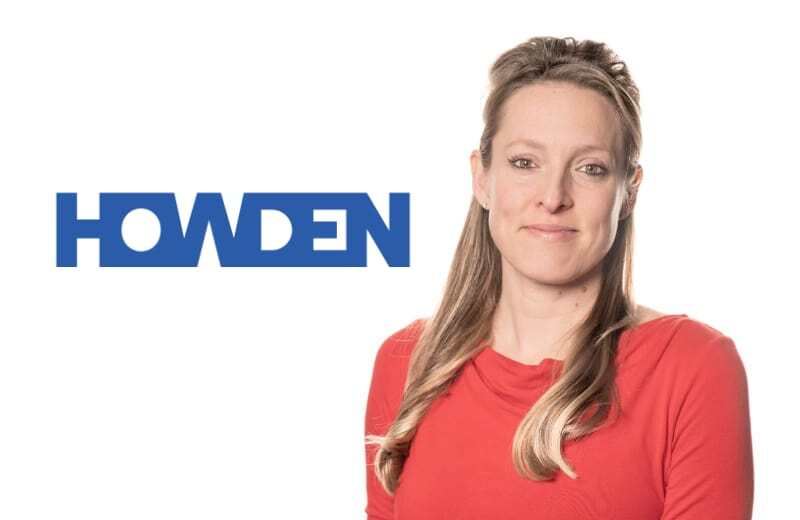
Investor appetite within reinsurance and insurance-linked strategies has expanded significantly over the last year, as market-responsive investors continue to deploy capital attracted by strong risk-adjusted returns and relative value compared to high-yield credit, which is currently trading at historically tight spreads, according to Cate Kenworthy, Managing Director, Howden Capital Markets & Advisory.As investor sentiment in reinsurance and insurance-linked securities (ILS) continues to evolve, capital allocation trends are shaping both deal flow and strategic direction.Looking back over the past year, this growth in investor appetite has been particularly pronounced.Kenworthy notes that early and contrarian investors who entered the market shortly after Hurricane Ian in 2022 are now nearly fully deployed and remain committed to the space.
These investors are closely monitoring rates and terms while also exploring diversification into non-catastrophe risks and different structures such as those available through Lloyd’s of London.“Meanwhile, market-responsive investors continue to deploy capital, attracted by strong risk-adjusted returns and relative value compared to high-yield credit, which is trading at historically tight spreads.This also includes the entrance of new investors in the ILS space.
For example, a landmark move came with California Public Employees’ Retirement System entering the market for the first time, signalling deepening institutional confidence in the asset class,” said Kenworthy.Kenworthy further emphasized the increasing interest among credit-focused managers in casualty and whole-account sidecars, motivated by prospects in float management and duration yield.Simultaneously, structured investments, which includes preferred equity and mezzanine debt, are also gaining momentum within the market, as investors prioritize contractual yield and downside protection, even at the expense of control or potential for upside.
Reflecting on this year’s conference season, which is always an important time of the year for the industry, a number of themes stood out, with capital inflows and the potential for market softening particularly standing out.“Many discussions focused on how profits are being reinvested and new money is entering the sector — prompting debate over how quickly conditions could ease heading into 2026 and 2027,” Kenworthy said.She continued: “At the same time, the scalability and reserving risk of casualty exposures drew heightened scrutiny.
With more capital targeting casualty, investors and underwriters alike questioned whether underwriting standards and reserving discipline can keep pace with this influx, and how duration and alignment risks are being managed.“Finally, there was strong interest in innovation within capital structures — particularly asset-based lending and hybrid ILS platforms.The discussion centred on how to scale these models effectively while maintaining underwriting discipline and alignment of interests between investors and risk carriers.” Furthermore, Kenworthy also outlined what factors she believes are likely to shape and drive deal activity or strategic decision-making over the next 6-12 months within the market.
Deal activity is likely to be driven by a combination of capital management pressures and investor selectivity.Many funds are approaching critical points in their life cycles, prompting a sharper focus on liquidity solutions and flexible exit routes.These dynamics are encouraging structures that allow investors to maintain exposure to insurance-linked returns while managing their own liquidity requirements,” Kenworthy explained.
Interestingly, Kenworthy also noted that the search for yield will also influence behaviour but cautioned that this comes with risk.“With credit spreads at compressed levels, investors are ramping up their education on the re/insurance and ILS space as they are drawn by the potential for attractive risk-adjusted returns.The challenge will be balancing increased capital flows with underwriting discipline, a theme that will continue to separate short-term opportunism from sustainable performance.” When it comes to decision-making, investor alignment will remain central according to Kenworthy, who explained that as platforms continue to expand and evolve, clarity around how risk and reward are distributed, and who retains control, will be a determining factor in capital formation.
The MD particularly outlined that structures that demonstrate transparency and alignment of interests are the ones that are most likely to succeed.Additionally, Kenworthy stressed that innovation will continue to attract new sources of capital, notably from asset-based lending and private credit managers seeking differentiated exposures.“As traditional credit markets become increasingly crowded, ILS opportunities offering contractual yield and low correlation present a compelling alternative.
Innovative structures that mirror the characteristics of asset-based lending are well-positioned to meet this demand, offering scalable access to reinsurance risk in formats familiar to credit investors.” Kenworthy also outlined that investors and allocators are placing greater emphasis on liquidity, transparency and structured yield as they seek more predictable and efficient capital deployment.“There is also a clear shift toward yield and downside protection.Structured investments, notably preferred equity and mezzanine debt, are favoured for their contractual coupon and limited downside, often preferred to traditional underwriting-linked upside.
“Additionally, strategic partnerships between both traditional and alternative asset managers and re/insurers are deepening, mirroring a significant trend in the life insurance sector.These collaborations allow asset managers to leverage underwriting expertise and manage insurance float more effectively, reflecting a long-term alignment of interests between financial and insurance capital,” she explained.Looking ahead to 1/1, one of the most important times of the year for the reinsurance and ILS space, three particular market dynamics stand out to Kenworthy, as the industry begins to shift towards the key renewals period.
“Investor priorities are shifting toward greater liquidity, transparency, and structural protection.Investors are placing increased emphasis on exit flexibility and cost clarity as they seek more predictable and efficient capital deployment,” Kenworthy explained.Concluding: “There is also greater scrutiny of underwriting discipline and how portfolios are positioned in the market between different products and lines of business will be a key focus.
“At the same time, traditional and alternative asset managers are pursuing deeper partnerships with insurers and reinsurers to manage float and gain access to underwriting expertise.”.All of our Artemis Live insurance-linked securities (ILS), catastrophe bonds and reinsurance can be accessed online.Our can be subscribed to using the typical podcast services providers, including Apple, Google, Spotify and more.
Disclaimer: This story is auto-aggregated by a computer program and has not been created or edited by Health Insurance USA.
Publisher: Artemis
Publisher: Artemis