



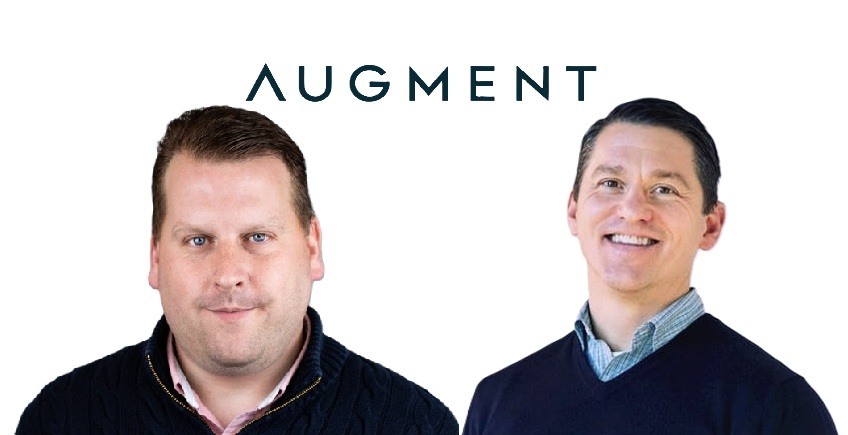
As the insurance-linked securities (ILS) market continues to expand, Augment Risk is positioning parametric triggers not merely as a peripheral alternative, but as a central, diversifying asset class defined by its structural independence from traditional indemnity-based retrocession, a shift the firm believes is fundamental to unlocking the next phase of third-party capital allocation.Artemis recently spoke to Kurt Cripps, Partner and Head of Global Parametric Specialty, and Thad Hall, Partner and Head of ILS Solutions at Augment Risk, who discussed a range of topics, such as how the company is positioning parametric triggers as a diversifying asset for third-party capital, as well as the role parametric triggers could play in managing the global AI and data center build-out.We began by asking the executives firm how Augment Risk is positioning parametric triggers as a diversifying asset for third-party capital? Cripps said: “I’ll start by saying that about 5% of cat bonds were already index-based.Independent Index based solutions are really interesting; the underlying must be an index like PCS data, a franchise, or wind speed.
With the education of investors, we’re seeing a real delineation between UNL retro, ILWs and parametric / index-based solutions.“As investors become more aware of this asset class, which is now several billion of the overall ecosystem, you’re going to see growth in demand for index-based solutions because they are cleaner and speedier.Investors wanting their money back quickly has always been a theme.
On the index side, where they are collateralized, claims are paid anywhere between 24 hours and 60 days.“We’re already seeing cyber downtime entering the market, which will invariably spread into the investor base.You’re starting to see it across ‘clash’ books.
Most people buy fronting on a carrier basis, their marine book, property book, or offshore energy, to establish diversification.Parametric is agnostic to class (all classes covered), you’re getting broader coverage if events occur.If you’re running a parametric‑only fund and making rapid payouts, you need the hedging on the back end to be aligned just as quickly.” “We can now compete in terms of the marketplace; once, parametric was limited, but now we’re doing second-event coverage from Texas to Florida on an occurrence or intersection basis (aggregate cover).
As the market softens and education grows, we’ll see a broader application for index-based products as data becomes more granular.” This evolution mirrors the historical trajectory of the broader financial markets.Hall notes that the current trajectory of the ILS space reflects the derivatives boom of the 1990s; growth in that sector was unlocked only when the market moved away from opaque bilateral swaps toward transparent, index-based benchmarks Hall said: “The way to get more investors into the space is to have a blend of indemnity-type cover and index.We’ve discussed whether we can collect enough data to create our own casualty index.
If you look at how the derivatives market evolved in the 90s and early 2000s, it really took off when you could index.You didn’t have to just do a swap between two entities; you could base the outcome on a transparent index.It then falls on both sides to diligence the basis risk, and it can be done very quickly.” Moving forward, as the parametric space continues to evolve, we asked the executives to outline what one structural innovation they believe will see the most significant scale-up in capital allocation over the next few years.
“Approaching this from the ILS space, I see a few truly innovative developments.One is increasing portfolio diversification of liabilities, which allows you to be more creative in how you fund the SPV to transform risk into an investable asset.By using a rated note rather than a traditional structure, you open doors to investors like life insurance companies that require rated assets.
While many private ILS deals are currently unrated, we are working on structures that could change that,” Hall explained.Another innovation Hall foresees is using parametric covers within a diverse property portfolio to strip away specific volatilities and preserve those ratings.“We’re also seeing structures historically used for retro sidecars being applied to different deal types, such as MGA whole accounts with fronting companies.
Over the next few years, I expect reinsurance and retrocession techniques to be increasingly applied to ILS deals covering primary insurance,” Hall added.Cripps also added to this, saying, “Secondary perils are also becoming more pertinent; we’ve seen a rise in wildfire deals where the cover is embedded as a supplement to peak catastrophe risk.Finally, weather protection is a major growth area.
It functions as both a risk tool and a balance sheet stabilizer to smooth earnings, particularly for renewable energy investors.For example, protecting a farmer or a wind farm operator when high winds prevent turbine installation.While Nat Cat will grow on an index basis, I believe weather-related ILS will grow exponentially due to the investment in renewables and the accumulation risks associated with data centers.” Attention then turned towards the current AI build-out that’s creating massive concentrations of value in data centers and other large-scale projects.
Both Cripps and Hall shared their views on the role that parametric triggers can play as the industry continues to grapple with this current wave of momentum.Hall stated that Augment Risk isn’t currently seeing much movement from data centers in the ILS space just yet.“Many investors we work with are financing these through off-balance-sheet SPVs, primarily through their private credit arms.
So far, they haven’t bundled those assets into an ILS deal, but that could change as exposure grows.This mirrors how the ILS market began in the 1990s: after a major earthquake and hurricane, traditional markets pulled back their property capacity, and new capital structures stepped in to fill the gap,” Hall explained.Cripps also acknowledged that the size of the opportunity is enormous but stressed that the firm doesn’t quite yet know its full scale.
“We are in a build-up phase, so our current exposure is lower than operational levels.From what we can glean, we don’t yet have the same limits or capacity in parametric markets that the traditional market offers,” Cripps said.“Where I anticipate friction is with ‘hyper-accumulation,’ particularly regarding tornadoes.
I often use a tornado picture and a fire engine to simplify the two areas where we help: these facilities can overheat and catch fire or be destroyed by tornadoes.Real estate investors often have much higher return period thresholds than insurance companies, some needing coverage up to a 10,000-year return period compared to the standard 1-in-250.This creates massive demand.
We will sit at the top of these towers or supplement them.“While we might be ‘the tail on the dog’ compared to the trillions in total limit required, we are the deal-makers.We take out the volatility and the extreme severity that both traditional carriers and investors worry about.” With this in mind, we asked the executives whether the company has any plans to do the same in other regions in the near future too.
“Historically, renewables were heavily subsidized, often guaranteeing returns regardless of whether it was windy, sunny, or if hydro levels were sufficient.Now, as the market matures and those subsidies drop away, investors are more exposed to resource volatility.We’ve observed that Latin America has become an enormous hotbed for renewable growth – arguably the most significant market in the world right now,” Cripps shared with Artemis.
“In a region where climate variability is high and insurance penetration remains relatively low, well-structured parametric solutions can play an important role in closing protection gaps.” He concluded: “We believe there is an untapped opportunity to combine weather and property coverage.Historically, CFOs bought weather hedges in isolation; we want to bridge that gap.By partnering with regional experts who have a strong ESG focus, we are innovating in this space.
We are already looking at ‘freeze’ risks and recently received a key weather opportunity from a Canadian energy company.We plan to use these cases as a test bed: if the model works, we will expand and continue to innovate in the weather risk transfer space.” ..All of our Artemis Live insurance-linked securities (ILS), catastrophe bonds and reinsurance can be accessed online.
Our can be subscribed to using the typical podcast services providers, including Apple, Google, Spotify and more.
Disclaimer: This story is auto-aggregated by a computer program and has not been created or edited by Health Insurance USA.
Publisher: Artemis
Publisher: Artemis