



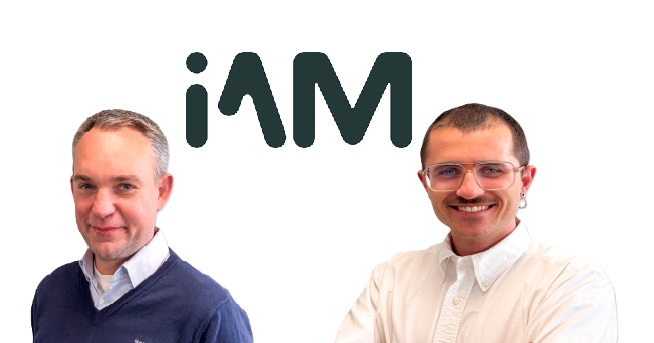
After helping Schroders Capital and global reinsurer Hannover Re launch their pilot tokenisation project in 2024, i.AM Innovation Lab has used the lessons it learned to help both companies’ which in time will help open the door to broader investor access.During a recent interview with Artemis, Pascal Nägeli, Partner and Co-Founder of i.AM Innovation Lab, and Alec Nikolov, Lead Product & Design, explain how the project evolved from a bespoke pilot to a reusable platform, what it took to make tokenised ILS work at institutional scale, and why they see tokenisation primarily as a cost and efficiency play.Established in 2018 out of a large Swiss asset manager, i.AM Innovation Lab has spent the past few years sitting at the intersection of asset management, technology and insurance-linked securities (ILS).“What we do as a company, is we design and build digital products for our clients and help them in general through the innovation life cycle.
Schroders Capital has been a client of ours for multiple years now.We previously helped them build the first version of their tokenized ILS product back in 2024,” Nägeli said.“We have a couple of areas that we directly like to focus on.
One is user experience and design, the other is tokenisation and AI, which is something we also cover for our clients.So, we primarily focus on new technologies that help deliver better, cheaper, and more effective experiences.” One of i.AM Lab’s most visible projects to date has been its work with Schroders Capital and Hannover Re on tokenised ILS structures.The initial pilot, effectively a minimum viable product (MVP) built as a bespoke solution for those two partners demonstrated that an ILS deal could be taken end-to-end on chain, right through to individual professional investors, including secondary trading of tokens on a marketplace.
On the back of that experience, i.AM, has developed a more mature, institutional-grade solution, enabling a large ILS transaction and bringing in funds, and potentially pension funds, as investors.According to Nikolov, the solution i.AM developed for this new project represents a significant evolution from the pilot.“We enabled both partners with their own wallet infrastructure to interface the blockchain.
I think that was one great achievement that we managed to accomplish,” Nikolov said.“With our solution now, they are able to include certain governance processes.For example, we introduced a multi-signature technology which enables them to require certain approvals from different parties to execute any transfer of assets on the blockchain.
They all do that through a smooth user experience on a web portal.” “Another key aspect was the deal size and everything that came with that.The large transaction comes with more regulatory and compliance requirements.So that was also a great achievement of the whole project group to innovate with regulators on these new emerging technologies.” Pascal, added to this: “In version one, it was really more a minimum viable product, and the investors were professional clients investing through their own wallet into an ILS structure, which was great to show how we can cover the end-to-end process up until the end investor.
“In the second case, the investors are institutional investors.It’s definitely a much bigger size than the first prototype and this is a live product, so funds are fully invested through DLT, through digital assets, into these insurance structures.And with this, I would say, we learned a lot in version one, and based on this, we were able to build the second solution.” Moving forward, Nägeli also tells Artemis why he believes that tokenisation and the digitalisation of financial and physical assets, using smart contracts and blockchain technology are beginning to gain much broader traction across the market today.
“In general, we believe that tokenisation and the smart contracts used on blockchain help to automate certain processes in a very standard way.So, it’s not a contract on paper where there is always a certain gray area.If it’s coded on blockchain, it’s coded, and it’s very strict.
This is particularly valuable in alternative assets, where the full value chain is still super fragmented,” Nägeli noted.He continued: “Another significant benefit is that an increase in the number of participants within a value chain leads to more reconciliations, an increase in the volume of messages exchanged, a higher requirement for approvals, and increased opacity of the entire process.Therefore, if you operate on a single ledger, representing one definitive source of truth, the necessity for all intermediaries diminishes significantly.
“For example, if you are a trustee in a standard ILS transaction, if you do this on chain, you can completely automate this process, especially if you use atomic swaps.Being on chain allows you to bundle cash and securities; so that only if both transactions are successful will the cash be received and the securities released.So, we’ve always said this is primarily a cost reduction case rather than just a fancy new innovation.
It’s really technology helping you to be more efficient.” To end, Nägeli shared with Artemis how tokenisation can further help enhance the ILS market’s ability to grow and provide improved services and more responsive risk transfer “Tokenisation is generally more cost efficient, and I also believe that it allows you to better control risks, because the more intermediaries you have, the more players are there, and the more interfaces or interactions you have, the more risk is there.So, if you can simplify the end-to-end value chain, it helps you to manage risk more effectively.“In relation to supporting the growth of the ILS market, I would like to clarify how we engage with new market segments.
For instance, I am convinced that this initiative demonstrates that we can cover the entire value chain up to the final investor.” “Therefore, it would be relatively straightforward to implement a mechanism such as tokenized ILS structures.Given that this token is easily tradable, a marketplace can be established for the buying and selling of tokens, thereby eliminating any concerns regarding lock-in.From the perspective of an investor, I believe this presents a significant advantage,” Nägeli concluded.
..All of our Artemis Live insurance-linked securities (ILS), catastrophe bonds and reinsurance can be accessed online.Our can be subscribed to using the typical podcast services providers, including Apple, Google, Spotify and more.
Disclaimer: This story is auto-aggregated by a computer program and has not been created or edited by Health Insurance USA.
Publisher: Artemis
Publisher: Artemis