





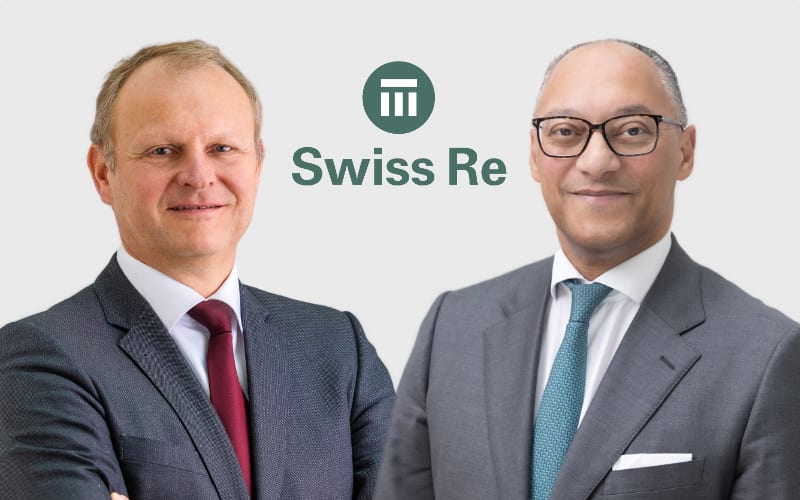
Swiss Re is working on “future ideas” within its Alternative Capital Partners (ACP) division that focuses on insurance-linked securities and third-party capital management, the firm’s CEO said today.While its CFO explained more on the fact the company may need less external retrocession in 2026.As we reported this morning, .We said in that article that the company highlighted the benefits of its reinsurance sidecars and its Core Nat Cat ILS fund, but had also noted it may need less retrocession next year.
During the Swiss Re management dialogue in London this morning, its leadership explained more on the retrocession side, while also hinting at more to come from the ILS offering at Swiss Re’s Alternative Capital Partners (ACP).First on the ongoing work to develop new insurance-linked securities opportunities for the company and third-party investors, Swiss Re Group CEO Andreas Berger commented, “I mentioned already, Alternative Capital Partners.Expect more to come.
“We have a leading position in the ILS market.It’s good, working on future ideas here, not to be disclosed yet.But we’re busy.” So, the Swiss Re CEO was not giving too much away today, but was still keen to impress on the analyst and investor audience that the reinsurance company sees opportunities to introduce new ILS initiatives.
Something to look out for.Then, Anders Malmström, Group Chief Financial Officer, went into more detail on the use of third-party capital at the reinsurer and Swiss Re’s expectations for its retrocession needs for 2026.The upshot is that, thanks to the aforementioned use of third-party capital and ILS structures to manage and balance its natural catastrophe exposures, as well as its strengthening balance-sheet, the company may not need so much external retro protection next year.
Speaking on natural catastrophe expected loss exposure the CFO explained, “The gross exposure increased over the last six years, from $1.7 billion, this is the expected loss or the expected claims from from Nat Cat, increased from $1.7 billion US dollars to $2.9 billion over the six years.The net, after hedging and taking out the smaller nat cat losses below $20 million, it increased from $1.3 billion to $2 billion.So quite a significant increase.” Malmström explained the drivers for this, saying that, “This was really supported by what I call the third-party investors, because that’s where you have alignment.
They’re interested to take some of the risk, through cat bonds and similar instruments.They have full alignment with us and you can manage the actual capital exposure.That’s a strong asset that we have, a strong tool that we have.” Looking ahead to next year, Malmström said, “What you can expect now going into 2026 is that we probably reduce a bit the external retro, because we can keep more risk on our balance-sheet than in the past.
And that’s a good tool for us then, to fine tune the actual capital that we want to use, that we want to have on our balance-sheet.“So that’s a very nice development.At the same time, I think it’s also good as we have a really strong relationship with these third-party capital investors, and they have also done very well over the last few years.” Of course, partnering with third-party institutional investors is a key way that Swiss Re can manage its capital needs and the risk on its balance-sheet, with this becoming more important than direct retrocession purchases.
That’s likely to be a trend that continues, as aligned partnerships with investors can prove a more strategic long-term way to manage exposure and capital, while also providing additional firepower for growth.However, it’s also a signal that Swiss Re still finds the nat cat business profitable, under its diversified model.On this, CFO Malmström explained that even in a softening market the catastrophe business is attractive to Swiss Re, “On cat, overall, we have a combined ratio of 68% over the last probably 10 years.
So this is a very profitable business.So even if prices are coming down, this is business you want and if we have risk capacity and capital capacity to take more on, this is beneficial, and this is exactly how you should think here.“So we can reduce a bit the hedging, the retro, because we still believe this is a very profitable business, that creates the right return.
I think also when you look at the capital intensity, I mean it’s about 40% return on capital just because of the diversification.So this business, with this combined ratio is worth taking a bit more risk.”.All of our Artemis Live insurance-linked securities (ILS), catastrophe bonds and reinsurance can be accessed online.
Our can be subscribed to using the typical podcast services providers, including Apple, Google, Spotify and more.
Disclaimer: This story is auto-aggregated by a computer program and has not been created or edited by Health Insurance USA.
Publisher: Artemis
Publisher: Artemis