







Collateralized ILS, parametrics playing role in digital infrastructure risks: Goodman, Guy Carpenter
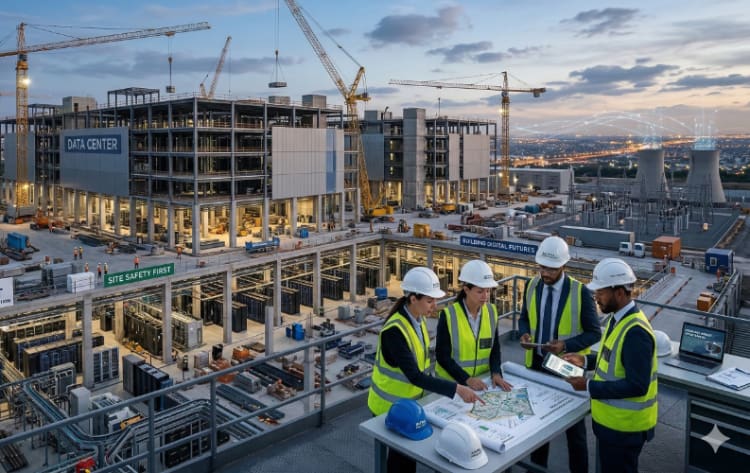
As the insurance and reinsurance market responds to the growing risk capacity needs of the digital infrastructure and data centre build-out, collateralized insurance-linked securities and parametric risk transfer are playing a role in covering exposures such as correlated power grid events, according to Guy Carpenter’s Jeremy Goodman.Speaking yesterday during a webinar on the digital infrastructure opportunity, the reinsurance broker’s Chief Client and Growth Officer explained the need to shift the reinsurance sector’s mindset from one focused on providing transactional capacity, to a focus on creating a structural capital architecture.First, Goodman explained the size of the data centre and digital infrastructure risk transfer opportunity, which has become one of the biggest talking points across insurance and reinsurance markets over the last year and increasingly is seen as a capital markets opportunity for ILS investors as well.He explained, “The reinsurance market has been underwriting data centres for decades.
What has changed is not the asset class, it’s the scale and the concentration, and we’re currently tracking more than 1,500 data centre projects globally, with over 900 of them still in planning, and more than 50 projects exceeding $7.5 billion dollars in capital.“The majority of them are in US and many are clustering around the same power hub.That level of pipeline and capital intensity is unprecedented for what was historically viewed as a diversified commercial property segment.
Digital infrastructure is shifting from a diversified commercial property segment, to more of a systemically concentrated infrastructure risk and reinsurance needs, to evolve from being transactional capacity, to structural capital architecture.“This is not a new risk, but it’s a new magnitude and importantly, this is one of the largest opportunities for our industry to be able to deploy capital at scale, as the digital infrastructure investment continues to accelerate.” Goodman then highlighted that this is not a risk capital issue, given the strength of the reinsurance market at this time, “There’s in excess of $650 billion of dedicated global reinsurance capital, and that’s growing at roughly 10% year over year.About $125 billion of that capital now comes from alternative sources, pension funds, sovereign wealth funds, institutional investors, all seeking diversified asset classes.
“So the issue is not a shortage of capital, the issue is how efficiently and intelligently we can deploy that capital and structure it.The digital infrastructure represents one of the most significant capital deployment opportunities for the reinsurance market in a generation.” As digital infrastructure scales in response to the needs of hyperscalers, data centres and the artificial intelligence (AI) build-out, it is introducing opportunities in the new risk exposures and correlations that are emerging.Goodman said, “There are a couple of shifts that are taking place, and the first structural shift is these large AI enabled campuses are clustering around constraining power nodes.
We see this in Virginia, Phoenix metro area and some other places.And these campuses share transmission infrastructure, substations, cooling systems and often similar supply chains.“A single transformer, or a grid outage, or an extreme weather event can impact multiple campuses simultaneously, and given the size of these hyperscale campuses, the severity of loss escalates materially.
Both the property damage, delay in start up, and business interruption.” Going on to state that, “The reinsurers are increasingly underwriting these ecosystems, not just the individual buildings and data centres are no longer just large buildings, they’re concentrated power ecosystems.“So this requires more advanced aggregation management.But it doesn’t reduce the reinsurance appetite, it just refines it.” Goodman then went into some detail as to how the complexity of the digital infrastructure build-out needs innovation, which he sees both reinsurance and ILS market’s responding to.
“Where we’re seeing meaningful innovation is moving beyond the repetitive, single site placements to portfolio placements, sponsored risk pools and mutual structures that are supported by quota share and collateralized reinsurance.And this allows capital to be calibrated, diversified and deployed far more efficiently than repeating large insurance towers, project by project,” Goodman said.“Instead of negotiating each campus independently, sponsors can access scalable, repeatable excess capacity through pooled and structured vehicles, and this allows for better diversification for the reinsurers, faster placement for the sponsors, and more predictable capital deployment.
The portfolio architecture is more capital efficient than repeating single site placements.” He continued, “We’re also seeing innovation in construction.Portfolio builds, risk programmes can predefine eligibility criteria, engineering standards and risk controls across multiple projects, and allows sponsors to be able to place many builds under one framework programme, rather than reconstructing a separate tower each and every time.“This increases the speed, improves capital predictability and reduces friction.
When the projects scale, the insurance programme has to scale with them, structurally, not incrementally.” Goodman then highlighted one area where both ILS capacity and parametric risk transfer triggers are playing a role, saying that, “It’s important to emphasise insurers and reinsurers view this as an opportunity to innovate, and we’re seeing that manifest itself in parametric outage layers and collateralized insurance-linked securities, all of which provide fast, predictable responses to correlated grid events.“Sponsored mutuals can allow smaller operators to access scale excess capacity and multi-year quota share structures can align risk capital with multi-campus capex pipelines.” Summing up the scale and complexity of the opportunity, Guy Carpenter’s Goodman explained what this means for the risk capital providers in reinsurance.“The market’s not retreating from digital infrastructure, it’s innovating around it, and with more than 1,500 projects globally, dozens exceeding $7.5 billion, digital infrastructure has become systemically important, and the strategic implications for the reinsurance sector are clear,” he explained.
“It’s one of the largest capital deployment opportunities, but it requires a shift in mindset.From transactional placement to structural capital architecture, from insuring buildings to underwriting interconnected infrastructure systems.“The opportunity is significant.
The capital exists.The challenge is our ability to structure, intelligently, manage the aggregation rigorously and aligning deployment with multi-campus growth pipelines.And as digital infrastructure scales, risk capital must evolve from annual placement, to strategic capital architecture.
“Broadly overall, to meet a lot of the needs and the fast pace with which this is moving, if there can be improved communication and engagement between the various different sponsors and principals and the insurers and reinsurers, that will increase the knowledge, the understanding and the comfort level.And I think that capital that is sitting on the sidelines, to some degree within the reinsurance market, will be more inclined to be able to come forward and deploy.“It will need to be done, perhaps a little bit more thoughtfully than it has in the past.
As I’ve said previously, moving away from that site-by-site type of approach to the interconnected ecosystem and so being able to deploy that capital at scale in an efficient, sustainable way.” During the same webinar, Mike Kolodner, Marsh Risk US Energy and Power leader, gave a succinct view of why risk capital is critical for these significant digital infrastructure projects and the aggregation risk they present.Kolodner said, “We often don’t think of insurance as being critical in these subjects, but when it comes to investment all of these assets have to be financed, all these projects have to be financed.Without insurance there is no financing.
“So it underpins risk management and insurance underpins the ability to invest in these assets, to lend to them, to finance them, and without insurance we’re in a tough spot.” When it comes to the digital infrastructure built-out and the data centre opportunity, the key for ILS markets to get involved is for opportunities to be structured to meet investor appetites and risk tolerances.Given the size and dollar-value of these construction sites and their ongoing operational risks, traditional insurance and reinsurance capital is likely to increasingly be augmented with layers of collateralized products, where exposures such as natural catastrophe or severe weather risks can be calibrated, modelled and segregated, or where there are meaningful interruption type exposures from risks that understanding can be wrapped around to structure them as parametric, or some other instrument appealing to capital markets players.These correlated exposures, such as power grid related, can drive enormous aggregation risk and so the depths of the capital markets will be welcome support for traditional re/insurance capital.
But they key is in structuring something both appropriate and appealing to ILS investors, in a way that can be understood, modelled and made investable..All of our Artemis Live insurance-linked securities (ILS), catastrophe bonds and reinsurance can be accessed online.Our can be subscribed to using the typical podcast services providers, including Apple, Google, Spotify and more.
Disclaimer: This story is auto-aggregated by a computer program and has not been created or edited by Health Insurance USA.
Publisher: Artemis
Publisher: Artemis