



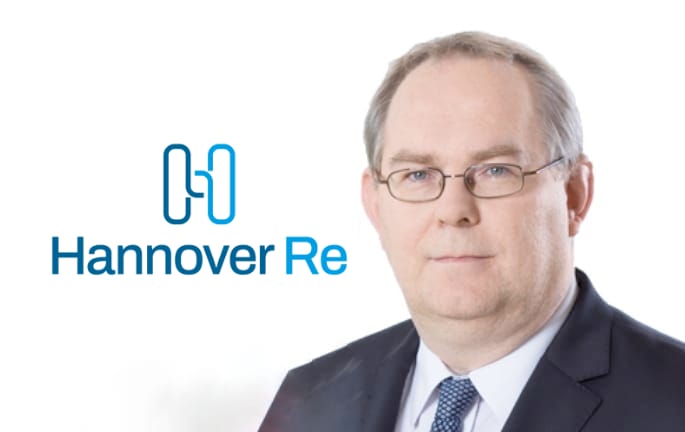
Speaking today, Hannover Re’s Sven Althoff explained that softening trends seen in property catastrophe reinsurance are expected to continue through 2026, while he also said that the ongoing conflict in the Middle East could have ramifications for certain specialty lines the reinsurance firm underwrites.Althoff, Hannover Re’s Executive Board Member for Property & Casualty business, also noted that the impacts from the Middle East war remain uncertain from a financial point of view, but importantly noted they could have an impact on firm order terms.Speaking this morning during a media call, Sven Althoff commented on the Hannover Re expectation for reinsurance renewals in April and beyond.He explained, “When it comes to expectations for the 1st of April renewals, as I said when we talked about the January renewals we do expect for the rest of the year that the trend we have seen at 1/1 will stay with us.
“So from that point of view, we do expect further softening from a property cat point of view.” Further stating that, “While there is an impact on firm order terms from the war situation, it is much too early to say.With the lack of any noticeable losses reported to-date, I would not expect a significant impact, though.” Althoff also commented on the severe winter weather that has affected the United States in the first-quarter of 2026, saying, “We have seen some activity from a natural catastrophe point of view.Most remarkable events have been the winter storm Fern and the blizzard Hernando in the United States.
“Too early to give you numbers today on those, but we will report on the numbers when we are talking about Q1 in our May call.Overall from those losses, we are well within our budget for the quarter.” During the call, Althoff also commented on Hannover Re’s own potential exposure to claims caused by the conflict in the Middle East, highlighting the specialty reinsurance portfolio as the most likely lines of business that could be impacted.“When it comes to the war in the Middle East, we hope you understand that the situation is still very dynamic, and it’s much too early to give you an estimate about potential financial impact for Hannover Re,” Althoff said.
Adding that, “From a coverage point of view, most of the traditional P&C lines of business do exclude coverage for war.On the other hand, we are expecting losses coming out of the specialty reinsurance portfolio, where explicit coverage for war related perils is given.” Later, he went into more detail on the specialty lines of business that may be exposed, saying, “When it comes to the heads of cover that are potentially exposed to war perils, on the specialty side it is marine and aviation war coverage, both for hull and cargo, you have exposure on the property side, via political violence and war event policies.“Depending a little bit on how the war is going through the potential economic impact of the war, you can also think about potential involvement of classes like trade credits or political risk when you think about project financing.” Qualifying this by saying, “So those are the heads of cover we are observing very closely, with nothing major when it comes to actual losses to report to-date.” At this stage it is far too early and uncertain for even the largest reinsurance companies to have a clear view of their financial exposure to developments in the Middle East.
But there could be some relevance for retrocessionaires, potentially some third-party capital, if the costs rise and claims begin to impact some of these specialty reinsurance lines.Hannover Re itself has some specialty lines retrocessional coverage, including through its long-established K-Cessions sidecar vehicle, which has typically featured some multi-line quota share coverage for the reinsurer.In fact, the K-Cessions sidecar structure features a quota share of non-proportional reinsurance treaties that include elements of marine and aviation, including offshore exposures.
There are some other ILS investment structures that incorporate elements of specialty lines such as this in the market as well.In addition, investors supplying capital to syndicates in the Lloyd’s market will also have exposure to specialty lines contracts that could face risks of loss if the conflict persists or escalates further.As a result, while the insurance-linked securities (ILS) market is largely not exposed to the war in Iran and the Middle East, due to its dominant focus being on natural catastrophe risks, there are always some multi-line quota share structures, some retrocessional protections, and even some small component of certain ILS funds, that incorporate elements of specialty lines and where third-party investors may be supplying some capital..
All of our Artemis Live insurance-linked securities (ILS), catastrophe bonds and reinsurance can be accessed online.Our can be subscribed to using the typical podcast services providers, including Apple, Google, Spotify and more.
Disclaimer: This story is auto-aggregated by a computer program and has not been created or edited by Health Insurance USA.
Publisher: Artemis
Publisher: Artemis