




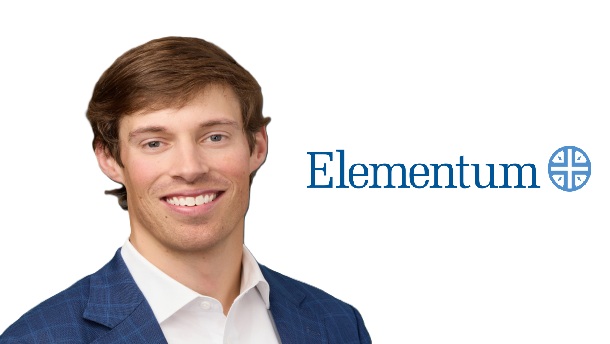
Coming off a record-breaking 2025, the catastrophe bond market has continued to expand further throughout the opening quarter of 2026, however as the sponsor base and rate of issuance continues to grow, this is creating a need for greater efficiency and more talent within the market, according to Jeff Davis, Partner and Chief Investment Officer, Catastrophe Bonds at Elementum Advisors LLC.During a recent interview with Artemis, Davis discussed a number of topics, such as how he currently views investor appetite for cat bonds and the wider insurance-linked securities (ILS) market, as well as whether he considers the current lower spread environment to be sustainable.To begin, Davis shared his outlook for investor appetite and sentiment for catastrophe bonds and ILS opportunities in 2026.“I would say that today, investors’ perspectives are more nuanced and have a greater reliance on individual circumstances and objectives.
In general, we entered 2026 with a favourable macro backdrop for ILS allocations, despite last year’s decline in spreads, and this has kept capital flowing in throughout Q1,” Davis said.“This can be seen through the robust new issuance pace to start the year, which is close to matching the record we saw last year.While we anticipate that this will continue, there is more uncertainty in the macro outlook today with events in Iran, private credit, etc.
so we think it is important to watch these developments and their potential impact on ILS allocations.“ILS is a minor component of many allocators’ overall portfolios, so we view the macro environment and the relative attractiveness of other asset classes as critical to understanding how investors may move capital.” Davis went on to note that within recent years, the industry has seen the macro environment work both for and against ILS.“In late 2022 and early 2023, we were pounding the table that spreads were at all-time highs and cat bonds had never been more attractive.
While many investors moved opportunistically, the denominator effect ultimately limited how much capital came in.Today, I think that has reversed.The denominator effect is often discussed as a negative, but it can work as a positive.
I think coming into this year, whether due to stretched equity valuations, tight public credit spreads, issues in private credit, or other developments, ILS still looked relatively attractive, which I think has caught some market participants by surprise,” the CIO further explained.As the catastrophe bond market continues to grow at a rapid pace, Davis also shared some thoughts regarding what he believes the market needs to do as the sponsor-base continues to expand, and both the rate of issuance and activity levels continue to rise.“I think it’s been a mixed bag in terms of successes and challenges.
With the market growing so rapidly, we have seen periods of new issuance where you can have 10 to 15 transactions in the market at once.I think that is creating a need for a greater amount of talent and efficiency in the ILS market.Teams need to be deeper, and they need to have better expertise.” Turning towards AI, the CIO outlined that the technology continues to develop further and how it’s an area that is actively being explored across the space.
“I think a question that remains is can you get more efficient in how you assess and process transactions to make sure that broker dealers and sponsors are getting the feedback that they need in a timely manner,” Davis said.He continued: “We have also experienced that during periods of robust new issuance, there has been an impact on the liquidity of the secondary market.There is a point at which attention gets diverted away from the secondary market.
So, if you’re looking to be active and maybe manage cash or alter your portfolio positioning, we have found it more challenging to get best execution on trades.To solve this issue, I think it goes back into the need for greater efficiency and more talent so that you’re able to process transactions better and you can spend more time monitoring the secondary market.” Given that the cat bond market is currently experiencing lower spreads in comparison to the peaks observed in 2023, we asked Davis to share whether he considers the current lower spread environment to be sustainable.“We are near the long-term average in spreads.
If you look back to 2017/2018, we saw periods where spreads were meaningfully below where they are today.I view today’s catastrophe bond market environment as well-balanced; we are still seeing capital flowing in and plenty of investor appetite coupled with a healthy appetite for issuance.“The underlying dynamics that are frequently discussed, such as increased insured values, population migration, climate change, and more conservative catastrophe models—will all continue to drive issuance.
This is especially true at the top of insurance towers, where cat bonds tend to be at their most efficient.We have seen double-digit numbers of new sponsors each of the last three years, and I expect to see that again in 2026,” Davis told Artemis.Sticking with the current lower spread environment, Davis also shared how persistent or sticky he foresees that they will be this time, as well as how investors responded to them so far “In terms of how sticky it is, I think it depends on the level of catastrophe activity we see.
It will likely come down to U.S.hurricane and earthquake risk, where the cat bond market is most concentrated.Since attachment points are more remote today than they were just a few years ago, the event needed to cause a dislocation or a rapid widening of spreads is much greater.
We believe it would take a loss of $80 billion to $100 billion in Florida, California or the Northeast to cause real market dislocation today,” the CIO noted.Switching attention now to a developing El Niño, which may influence and perhaps depress tropical storm formation in the 2026 Atlantic hurricane season, Davis acknowledged how there has been some discussion across the sector questioning whether hurricane forecasts should be considered during cat bond portfolio construction.With this in mind, Davis shared that Elementum believes that a broader approach is necessary; among the many variables in cat bond portfolio construction, meteorological conditions should certainly be one of them.
“While there is no perfect correlation between hurricane activity and insured losses, you cannot have a hurricane-related insured loss without a landfall.“Location of course matters when determining insured loss.However, if you look at historical data during La Niña seasons, the U.S.
averages roughly 2.5 hurricane landfalls, compared to just over one during El Niño seasons.Said differently, a U.S.impact has historically been almost twice as likely during a La Niña.
We believe this should be actively considered when constructing a cat bond portfolio,” Davis concluded...All of our Artemis Live insurance-linked securities (ILS), catastrophe bonds and reinsurance can be accessed online.
Our can be subscribed to using the typical podcast services providers, including Apple, Google, Spotify and more.
Disclaimer: This story is auto-aggregated by a computer program and has not been created or edited by Health Insurance USA.
Publisher: Artemis
Publisher: Artemis